
Exploring Furniture Retailers in Johannesburg
Top Furniture Districts to Visit
Johannesburg’s furniture retail scene spans more than 15 distinct trading districts, yet the average shopper visits fewer than three. That gap explains why many people never find the right dressing table. The city rewards a deliberate approach.
Start in the inner city. The CBD’s furniture quarter, around President and Joubert Streets, operates as a dense warren of independent showrooms. Many have traded for decades, offering everything from reproduction Victorian pieces to solid contemporary builds. Jeppestown, just east, runs a more chaotic version with workshops that manufacture on site.
The districts worth prioritising:
- CBD furniture quarter: high density, negotiable prices, trade focused.
- Bruma Lake: mid range, mixed with home decor chains.
- Randburg and Bryanston: design led showrooms with longer hours.
- Maboneng: curated boutiques, smaller but higher quality.
Each district carries a different price structure. The CBD and Jeppestown reward buyers who inspect joints personally. Randburg and Bryanston suit those who want a warranty. Dressing table stores Johannesburg are distributed across these areas, and the selection varies widely.
Large Chain Retailers vs. Boutique Shops
Shopping for a dressing table in Johannesburg splits cleanly between national chains and independent boutiques. Most buyers default to chains because of certainty. These retailers offer standardised ranges, warranty protection, and finance plans that spread the cost. Staff receive identical training in every branch. That consistency works well if you need a fast delivery window or a matching bedroom set.
Boutique shops offer the opposite tradeoff. They run on tighter margins, work with independent artisans, and negotiate on price. You might wait six weeks for a custom build, but you can specify dimensions, timber species, and finish. The difference shows when you inspect dovetail joints or open the drawers.
For dressing table stores Johannesburg, both approaches solve real problems. Chains provide predictability. Boutiques provide specificity. Dressing table stores Johannesburg that operate as boutiques often serve repeat customers, because a well-built piece outlasts trend cycles.
Hidden Gems for Vintage and Second-Hand Finds
The search for a dressing table in Johannesburg takes a more interesting turn when you leave the curated showrooms behind. The city’s older suburbs are dotted with consignment warehouses and liquidation outlets that receive no marketing budget. Inside, you will find robust pieces from the 1970s, solid wood frames with patina that a new finish cannot fake. A dressing table stores Johannesburg operation often overlooks these spaces, dismissing them as too time consuming. That is a mistake worth making.
Vintage hunting here requires patience. The stock changes daily, and most of it arrives from estate sales where a buyer must take the entire bedroom lot. That arrangement produces bargains for the individual looking for one good piece. You will inspect a few items with warped veneers and sticky drawers. The payoff comes when you discover a solid stinkwood or teak frame with original brass handles.
- Check the drawer runners and the back panel. Look for timber that has not been sprayed over or painted.
- Ask about the previous owner. Age and neighbourhood can tell you more about the quality than any sales pitch.
- Bring a tape measure. Door widths in old Johannesburg homes are narrower than most modern flats.
These stores rarely hold stock for long, because the pricing is honest. A dressing table stores Johannesburg dealer might charge three times more for the same piece after a basic refurbishment. The unpolished version is your shortcut to a better deal. Many of these outlets let you take the item home on the same day, provided you have a vehicle with enough space. The veneer might need a few hours of attention with a damp cloth and a steady hand, but the structural integrity is often superior to anything with flat-pack screws.
The social aspect sets these places apart from the boutiques. Conversations happen over the edge of a lifted mirror, and seasoned collectors often share which depots receive the best glassware from older estates. You simply need to visit more than once a month, because the turnover follows no predictable schedule. One week you will see nothing but laminate headboards. The next week, a full walnut set from a Houghton mansion appears on the floor.
Dressing table stores Johannesburg that focus exclusively on new products will not guide you toward these finds. That is the point. You trade the reassurance of a warranty for the satisfaction of rescuing a piece with a history. The result is an item that holds its value and adapts to changing colour schemes without looking out of place. Every estate sale and hidden warehouse carries a different combination of eras and conditions, so the individual results vary considerably.
Choosing the Right Material for Your Vanity
Solid Wood Classics and Their Durability
Solid wood remains the benchmark for longevity in bedroom furniture, and the species you choose matters more than most buyers realise. Oak offers a pronounced grain that hides daily wear, while walnut darkens gracefully over decades. When you browse dressing table stores Johannesburg, ask about the joinery, not just the finish. Dovetail drawers and mortise and tenon frames indicate a piece built to endure.
Some manufacturers use engineered boards with a thin veneer layer. It looks identical in the showroom, but it reacts poorly to humidity and chips along the edges. A daily-use vanity demands solid hardwood. Consider these durable options:
- Teak for moisture resistance
- Maple for scratch resistance
- Cherry for a colour depth that deepens with age
Most reputable dressing table stores Johannesburg will let you inspect the underside of the tabletop. Look for solid planks rather than finger-jointed sections. That detail separates true heirloom quality from mass produced furniture.
MDF and Engineered Wood Options on a Budget
Engineered wood gets a bad reputation, but I have watched moisture resistant MDF dressers outlast solid timber pieces that cost triple the price. The difference lies in board quality, not the label. When you visit dressing table stores Johannesburg, ask for the grade of MDF used and inspect the finish on any exposed edges.
- Sealed edges protect against humidity
- Thick back panels prevent drawers from jamming
- Full extension slides survive years of heavy use
A well made engineered vanity from dressing table stores Johannesburg can rival traditional joinery when the manufacturer uses plywood cores instead of particleboard. The trick is to lift the piece slightly. If the base flexes, the frame is too thin.
Glass and Mirror Accents for Modern Appeal
Your vanity’s surface determines how it reflects light and daily use. A glass top adds a cool, clean layer that protects the timber underneath while reflecting morning sun. Mirror accents, whether a full back panel or slim bevelled strips, change how a small room feels.
At dressing table stores Johannesburg, the difference between polished edge and flat polish mirrors is worth understanding. Polished edges refract light, flat polish produces a cleaner line. That choice alone can age a design by ten years.
- Mirror backing is silver coated or copper coated. Silver resists humidity.
- Glass thickness ranges from 4mm to 8mm. Thicker glass handles daily jewellery wear.
Tempered glass costs more, but it avoids sharp shards if it ever breaks. Ask for it when you visit dressing table stores Johannesburg.
Metal Frames for an Industrial Look
Powder coated steel has overtaken polished chrome as the default choice in dressing table stores Johannesburg. What I notice most is the shift toward texture over shine. A metal frame with visible welds and a matte finish creates an industrial aesthetic that pairs well with timber or glass tops.
Gauge thickness matters for long term stability. Thin frames flex under the weight of a solid top. Steel between 1.5mm and 2mm resists bending. Aluminium is lighter but softer, prone to dents. Brass adds warmth but requires frequent polishing.
- Black oxide, which darkens the surface unevenly
- Zinc plating, offering a subtle metallic sheen
- Clear lacquered raw steel, preserving the original mill scale
Each finish behaves differently with cleaning agents and humidity. Dressing table stores Johannesburg typically stock two or three options. Your choice will affect both longevity and the room’s overall character.
Popular Styles and Trends in Bedroom Furniture
Minimalist and Scandinavian Designs
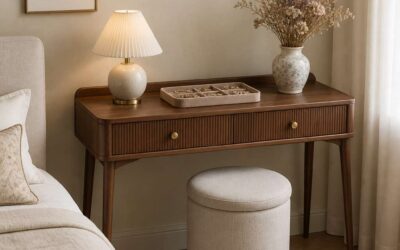
Scandinavian design has quietly dominated bedroom furniture trends in recent years, and Johannesburg is no exception. The appeal rests on a simple premise: form follows function, but comfort remains king. Shoppers visiting dressing table stores Johannesburg now expect pale oak, soft white finishes, and uncluttered silhouettes that make small spaces feel larger.
What sets these pieces apart is their focus on daily routines. A well made minimalist dressing table offers quiet storage, often with hidden compartments or floating drawers that reduce visual noise. The result is a calm corner for getting ready, not a sprawling statement piece. When exploring local showrooms, notice how these designs handle light and shadow. Subtle grain patterns and matte surfaces reflect a deliberate restraint that feels modern yet enduring.
Practical elements worth observing:
- Fluted or slatted fronts that add texture without ornament
- Integrated charging stations disguised behind lift up panels
- Bench seating that tucks fully under the table top
That last detail matters more than you might think. Many Johannesburg flats have tight floor plans, so a dressing table that disappears when unused becomes a true asset. The best retailers understand this and stock pieces that balance visual lightness with genuine utility. Minimalism, in this context, is not about emptiness. It is about choosing what earns its place.
Glam and Hollywood-Style Vanities
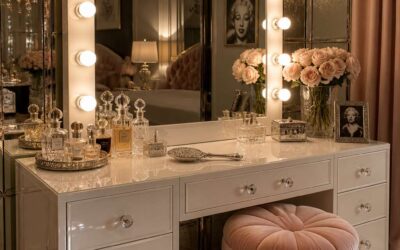
One Johannesburg showroom manager put it simply: “People want the red carpet feel, but with real storage.” That sentiment explains the return of glam and Hollywood style vanities, where mirror framed lighting and bevelled glass take centre stage. The style is theatrical, yet practical!
The lighting is the crucial element. Warm, dimmable bulbs provide even illumination for makeup, which flat overhead lights cannot match. Most dressing table stores Johannesburg carry at least one glam line. Some designs hide jewellery trays behind hinged mirror panels and include power sockets in side drawers.
- Mirrored tops that reflect light and widen small rooms
- Bulb rings in chrome or gold with dimmer switches
- Velvet stools that slide fully underneath
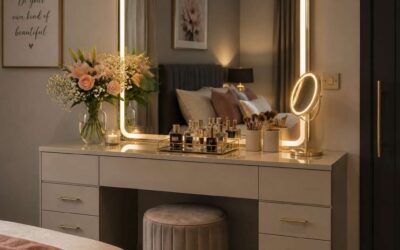
Compact versions from dressing table stores Johannesburg use a slim backlit panel instead of a heavy mirror frame, which suits tight flats. The vanity feels indulgent without demanding the whole room.
Rustic and Farmhouse Finishes
Some dressing table stores Johannesburg now stock pieces that feel inherited rather than purchased. Reclaimed pine and oak frame these vanities, with surfaces scratched and darkened through use. One retailer described it as “furniture with a past life,” and that history gives each piece a quiet authority. The best designs keep flaws visible, not covered. A knot in the grain or a patched joint becomes part of the character.
Shelf vanities are the practical workhorse in this category. Since the exposed wood grain does the visual work, ornate metalwork and glass accents stay minimal. Designers pair the warm wood with slate or stone tops, which hold up against spilled toner and daily makeup application. The shelves themselves, often open or with slatted fronts, let you display perfume bottles and ceramic bowls.
For those with smaller rooms, the style translates into simpler lines. A low chest with a fold-out mirror serves the same function without the footprint.
- Solid acacia or sheesham with a matte finish
- Black iron handles and hinges that dull with age
- Natural wax coatings that allow the wood to breathe
- Plank-style drawer fronts that echo barn doors
These vanities work well in city apartments where a reclaimed oak piece softens the coldness of concrete and glass. Several dressing table stores Johannesburg have expanded their range here, meeting demand for an Earthy alternative to the high gloss styles. The trend moves past a simple finish. It is about choosing wood that will continue to change, warp slightly and crack with the seasons, giving each piece a genuinely singular appearance. Pair them with brushed linen curtains or aged brass lamps for a cohesive look.
Convertible and Space-Saving Solutions
A Johannesburg interior stylist once told me that modern bedrooms are shrinking, but expectations are not. That observation anchors the demand for convertible bedroom furniture, where the dressing table must justify its footprint. In dressing table stores Johannesburg, buyers are asking for pieces that shift between work and grooming duties.
The most practical designs fold into the wall when not in use. A drop-leaf vanity with a mirror that flips down becomes a console table. Others arrive as tallboys with a pull-out drawer that reveals a lit mirror. Some retailers stock modular units where the top lifts to expose jewellery storage.
- Wall-mounted desks with integrated mirrors for rental flats
- Ottoman-style vanities with hidden compartments and lockable lids
- Armoires with pop-up make-up stations
These solutions suit more than compact rooms, and dressing table stores Johannesburg now lead with these hybrid designs.
Practical Tips for Buying a Vanity Unit
Measuring Your Bedroom and Ensuring Proper Fit
Nearly 40% of vanity returns stem from incorrect size assumptions, a number that surprises most shoppers. When you visit dressing table stores Johannesburg, the stunning displays can tempt you toward impulse choices. However, your bedroom’s dimensions should dictate the purchase, not the showroom’s lighting.
Take these three measurements before you leave home:
- Wall width where the unit will sit
- Height from floor to any window sills or radiators
- Depth from the wall to the opposite fixture, like a bed or wardrobe
Add at least 20 centimetres of walking space in front of the drawers. Once you have those numbers, sketch the footprint on the floor using masking tape. I’ve used this trick dozens of times, and it reveals whether a double-width unit feels cramped. A proper fit means comfort and function, so patience here pays off!
Lighting Considerations for Makeup Application
The quality of your makeup application hinges on your vanity’s lighting setup, a detail often undervalued until your foundation looks streaky in daylight. At dressing table stores Johannesburg, you will find units with impressive bulb arrangements, but the experience differs entirely in your home’s environment. Overhead ceiling lights create unflattering shadows across the face, while a single side lamp causes uneven illumination that obscures contour blending.
The optimal configuration involves three points of light: one directly in front and one on each side. This arrangement minimises shadows and provides a clear view of your complexion. Pay attention to the colour temperature of the bulbs you select. Warm yellow tones distort foundation shades, so opt for daylight LED bulbs around 5000K to mimic natural conditions.
– Position the vanity perpendicular to a window rather than facing it, preventing harsh glare.
– Install a dimmer switch to adjust brightness for evening glam sessions.
– Consider a magnifying mirror to complement your unit for precise work.
– Use a swivel sconce for flexibility when styling hair.
Your domestic electrical setup will also differ from the showroom’s professionally wired display. Before purchasing, ask whether the unit ships with integrated fixtures or requires separate installation. Many boutiques now offer built-in LED strips with touch sensors, which are excellent for tight spaces. A dimmer transforms the room’s mood seamlessly, allowing your dressing table stores Johannesburg purchase to serve both daytime routines and late night touch ups.
Storage Options: Drawers, Shelves, and Cubbies
The real test of a vanity unit is how it handles your everyday chaos. At dressing table stores Johannesburg, you will see options with shallow trays and deep drawers, but think about your own collection first. Mascara wands and lipsticks suit slim organisers, while hairdryers and styling tools need cubbies with clearance.
Drawers with soft close mechanisms prevent late night slamming. Adjustable shelves allow you to shift between tall perfume bottles and stacked palettes. A divided cutlery tray repurposed inside a drawer works wonders for brushes. Before buying, measure the height of your largest product, not just the unit’s footprint.
- Full extension drawers reveal the back row without a struggle.
- Vented cubbies keep products fresh and prevent odour build up.
Setting a Realistic Budget Without Sacrificing Quality
A price tag whispers a promise, but your total outlay includes more than the sticker at dressing table stores Johannesburg. A cheap unit built from particleboard may look fine under showroom lighting, yet it often needs replacement within two years. That translates to more expense over time. A modestly priced vanity with a solid wood frame and real drawer slides serves for a decade of daily use.
Solid construction matters in high traffic zones like a bedroom. The handles, hinges, and finish see constant touching. I always ask about warranty specifics too.
– Confirm the frame material, not just the door fronts.
– Test the drawer slides yourself.
– Ask about replacement parts availability.
Your budget should account for delivery and assembly fees. Online bargains sometimes become costly when hidden charges appear later. A reputable store will quote the full figure upfront.
Checking Delivery and Assembly Services
Delivery and assembly fees can add 20% to your total at dressing table stores Johannesburg. Many buyers discover this only at checkout. A quoted price for the vanity rarely covers carrying it up two flights or connecting the mirror. Ask for a full breakdown before committing. Some shops include assembly in the sticker price, while others treat it as an add on. Confirm which one applies to your unit.
The skill level of the assembler matters. A technician who builds vanities daily will align drawers and adjust hinges properly. A courier who happens to offer setup might rush the job. Request the specific team assigned to your order.
- Do they bring protective floor coverings?
- Will they remove the packaging?
- What is the charge for disposing of the old unit?
These details separate a smooth experience from a frustrating afternoon. A store that answers clearly demonstrates genuine care for the entire process.
Custom-Made vs. Ready-to-Assemble Options
Benefits of Commissioning a Local Artisan
When you browse dressing table stores Johannesburg, the real decision often comes down to speed versus longevity. A ready to assemble unit gets you home with a box under your arm today. Commissioning a local artisan takes weeks, sometimes months. But what arrives is furniture built for your exact proportions.
That detail matters more than you might expect. A local maker can adjust drawer depths for tall bottles, set the mirror to your seated height, and finish the piece to match your existing trim. Your space is rarely a perfect rectangle. A custom build addresses those awkward angles directly.
I have watched friends replace the same flat pack vanity twice in five years while a commissioned piece from a carpenter on the East Rand still stands firm. The initial price difference narrows once you add delivery, assembly tools, and repeated replacements. For an oddly shaped alcove or a treasured collection of cosmetics, commissioning a local artisan is the practical route.
Where to Find Made-to-Order Specialists
When the box says “some assembly required,” the hidden cost rarely appears on the receipt. The time spent wrestling with cam locks and misaligned dowels is real, and for many shoppers in dressing table stores Johannesburg, that time matters more than the savings on paper. A made to order piece skips that entire ritual. It arrives finished, sanded, and ready to stand in the corner you measured twice.
The gap between these two paths is not just about patience. A ready-to-assemble vanity is engineered for flat packing and freight efficiency, which means you inherit the compromises of a universal design. A custom piece, by contrast, starts with your wall dimensions, your storage habits, and your preferred mirror height. That is the difference between owning furniture and simply occupying it.
Where to Find Made-to-Order Specialists
Local joinery workshops and bespoke furniture makers operate quietly across the city, often without a retail storefront. To locate them:
1. Ask a reputable upholsterer or curtain maker for a referral. They see the work of carpenters daily.
2. Visit the smaller stalls at weekend design markets, particularly those in Parkhurst and the Maboneng precinct.
3. Search for cabinet makers in the industrial units along Pretoria Main Road, where several established workshops still operate.
These specialists usually maintain a showroom with sample finishes, even if their production happens elsewhere. Booking a consultation lets you see the range of hinges, handles, and lacquer options without committing to a full commission. The best part is that most will quote a fixed price for a standard size, so you know the figure before a single plank is cut.
Popular Ready-to-Assemble Brands and Their Pros
Custom made pieces demand patience and deposits. Ready to assemble furniture shifts the labour to you and your hex key. The average consumer spends nearly two hours assembling a single flat pack vanity, according to logistics studies, and that figure rises when instructions go missing. Shoppers browsing dressing table stores Johannesburg often weigh this against the price difference, which can be substantial.
Popular ready to assemble brands have responded with better engineering. IKEA’s MALM series, a model I assembled twice, uses captive nuts that reduce misalignment. Argos’s in house line and B&Q’s own brand offer similar improvements. The advantages are visible in three areas:
- Lower upfront cost, often 60% less than a commissioned piece.
- Immediate availability, no six week wait.
- Flat pack boxes fit through narrow doorways and up stairwells.
Buyers comparing models across dressing table stores Johannesburg notice these advantages quickly. The trade off is durability and fit, but for renters or first time buyers, those concessions feel acceptable.
Time and Cost Comparisons for Both Routes
A custom vanity can consume three months of your calendar and a deposit that vanishes into the workshop. Ready to assemble pieces demand an afternoon with a screwdriver, but the price difference often exceeds 50 percent. In my experience, the real cost appears later: refinishing a bespoke oak piece versus replacing a particleboard top after a spill. When I compare options across dressing table stores Johannesburg, I consider what my time is worth. The numbers look different for a tenant than a homeowner.
Here is a comparison I use when weighing the routes:
- Custom made: 12 to 16 week lead time, 40 to 60 percent higher price, permanent installation.
- Ready to assemble: same day pickup, lower upfront price, portable.
The hidden cost of the flat pack route is your labour, but that also gives you flexibility. The hidden cost of the custom route is waiting and the non refundable deposit. Shoppers at dressing table stores Johannesburg must decide which delay feels acceptable.
0 Comments